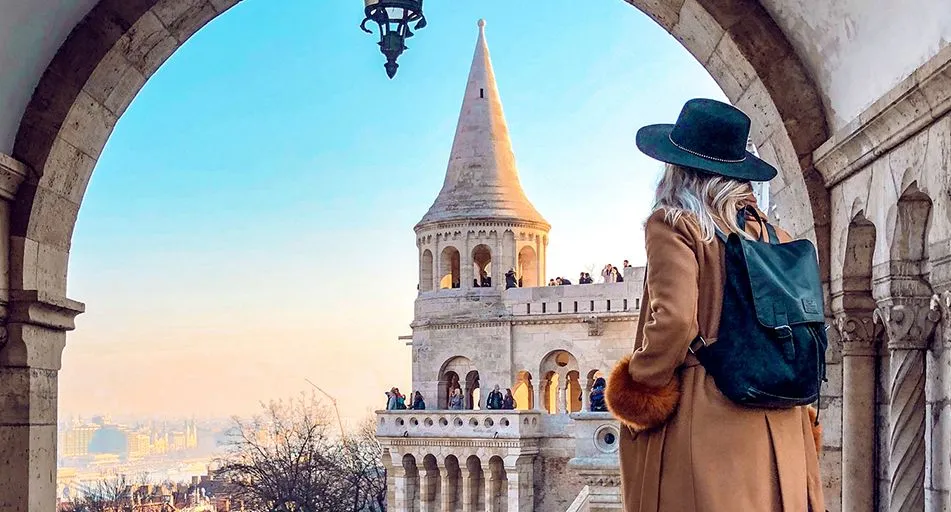
It is in our nature. We are borne as people of novelty and our very minds are programmed to pursue the thrill of anything new. It is to far away lands where we reserve our finest cameras, our most adventurous selves, and our matchless power of attention. We map out schedules to visit cities where we would be staying only seventy-two hours, gasping over the maps and reviews and making sure that we would not allow the new to hold on even a drop of its experience. However, the places we occupy most days of our life, the cities we live in, the towns we have been to since our infant years and the landscapes which have been the backdrop and the setting of our day to day living experience are often left with all the leftovers of our curiosity. They are erased, and the information about them scuttled under the potent sedative of routine. We trot the same streets, we pass by the same buildings and look at the same monuments with a blurred, sightless eye. The extraordinary has been made to become ordinary and in the process thereby, no longer exists in our perceptions. Really seeing a familiar destination is, therefore, not an activity of discovery, it is an activity of rediscovery. It is a muted revolt against the stolid efficiency of the brain, against taking things as they are and, perhaps, doing the same old thing in the same old way.
The main barrier that exists between us and reaching our goal is what is called a phenomenon that experts call: perceptual blindness, or habituation. We have a very efficient brain machines, whose strategy at conserving energy involves making mental shortcuts. We are in a discovery mode when we enter a new place and our senses are extra-alert. We observe special design, the sound of unknown city, the odor of unusual flowers or unknown food. However, when we have to follow the same routes everyday, our brain will become accustomed to what is about to happen. It labels the fancy design over a door frame, the specific blue of a fence belonging to the neighbours, and the big mural in a brick wall as known information. After being tagged, this information is filtered out of our conscious to make some space to give focus and attention to more attention/urgent and new stimuli, such as a car that is coming or a text message on the phone. We stop noticing the street, but only our destination. We drive through autopilot mode, walking through the world whose actual property our mind stopped consciously monitoring. We need to be conscious together with the deconstruction of this short cut in order to reclaim our sight. Our brain has to be fooled to think that what is well-known is in reality strange and deserving of its utmost attention.
Among the best ways to bring this is to deliberately impair our predominant sense of seeing and we plug the others. With all the things that we associate seeing of a place with visual, but a destination is a symphony of not just one, but many senses. Just as an example, you can go on a walk around a familiar park with the express sole purpose of listening. Look away, or close your eyes and pretend that you are not looking at it. What appeals to you out of the evident traffic noise? Do you find it easy to separate the high pitched sound of a sparrow with the sad pigeon coo? Do you hear the sound of the wind in various kinds of trees: the quiet chatter of the pine needles and the dry rustling of the autumn leaves? As much as skyline is particular, so is the soundscape of a place. Do likewise, and take your own scent-tour of your own neighbourhood. Pass by the local bakery as they open the door with fresh yeasty-sugary-wafty aroma. Stand close to a flower shop, leather repair store or a rain-drenched spot of ground. Fragrances are strongly connected to memory and emotion and it is by concentrating on them that you tap into a dimension of your milieu that is highly unique and suggestive a dimension that is totally overlooked by your ordinary, task-like commute.
The other effective instrument is the creative restriction. By routine is our business broad and well-done; because it is forced, it turns aback into little-trodden and forbidding alleys, where there is a chance to find something out. Select one colour and one afternoon shoot everything and anything you can find that is of that colour. This is a simple rule and it turns a usual walk in a treasure hunt. You catch suddenly the bright red of one berry between green bushes, the pale indigo of a left-forgotten political poster stuck to a lamppost, the yellow gold of a dandelion struggling through a crack in the urban surface. Such details existed all the time, but the limit makes you have an impulse to seek that information. There are endless ways in which you can use this principle. Take a day and just walk around streets that start with a first letter of W. Or, consult a map and trace a perfect circle around where you live, center in the middle and declare you will walk around the rim of this circle, through parks or alleys or places that need to be cut through. This random regulation will make you travel your own city in an utterly illogical fashion, making you go where there would be absolutely no point to ever visit in the first place. You end up as a voyager in your native land, with no fixed destination or need.
We should also learn to appreciate the past of what seems to be a familiar world. Each corner of a street, each house, each park bench is filled with stories which we are deaf to. The art-deco modern coffee-house at the corner could be built on the site of a blacksmith forge of the 19th century. When you take your dog out to the silent park, there might have been an influential speech of a great person or an unrestrained carnival on the place of its location one hundred years ago. To get involved in this obscure past is to wear glasses that will enable time travel. Go to your local historical society or your library. Search in the archives of past photographs of your street. You can read what the people who traveled the same road centuries ago experienced. Or when you learn that the humble-looking brick structure you walk by on the way to work was formerly a swinging night club of jazz or the hideaway where a clandestine brigade of political radicals held meetings, then it is no longer a humble brick structure. It turns into a window, a real bridge to another time. Your city starts to show itself to you as something dynamic, constantly being written over and rewritten over, and all you have to do is know how to read to see all the levels on top of each other and beneath each other, still legible though dated.
Another easy but life changing way of changing your perception is by changing mode of transportation. When you are used to driving, walk or ride a bicycle. The flow of mobile life is different when a person is on foot. you have the time to pause, to glance overhead, to read the plaques on the buildings, to look in the shop windows. You become aware of the little community garden between the two apartment blocks, of the elaboration of the ironwork on a gate you normally fizz past. On the other hand, in case you are a permanent pedestrian, take a local bus. A new world can be seen through the high view point of a bus window and you can look at your own street completely different. You get to see the architectural details on the second floors of the buildings things that you could never see when you were on the pavement. The bus route in itself is a tour through the arteries of the city as it links distant neighborhoods and allows people to see the subtle changes between the culture, architecture, and demographics of each stop on the line. You sit as an observer who is not supposed to do any navigation and relax as you watch the city unfold to you the way it unfolds to the movies being viewed in your window.
This is one of the most life changing activities, which involves making yourself the tour guide to the imaginary visitor. Even better ask a friend who has never visited your city to visit and take him/her around. When you explain a place to a person, that makes you view it through his/her eyes. Here you are taking notice of things you stop seeing years ago same places pointing out landmarks. You attempt to describe what is special about a certain neighbourhood, and just in this process you yourself have to define it. You provide the respondents with answers to the questions- What is that building? How come that street is called that?–and you learn how little you are conscious of about your own street. Out of their curiosity, they turn into mirror in which scientists can already see lack of same interest. At the same time, it is also a spark which can help incarnate their interest once again. You begin to experience the personality of your city not as a generalization, but as a set of concrete facts, episodes and particularities that you are now embroidering into a story to a remotely distant person. When you teach them you teach yourself.
Artist tools may also be perception tools. You do not have to be a professional artist to learn to see the way they see. Go with a sketchbook to a well-known square and attempt to draw a one-doorway or a lamp-post. Drawing imposes an extreme extended kind of approach. You must really study the object, take cognizance of its proportions, of its text, of the light and shade on its surface. What you do not see you cannot draw. An hour or two later you will be familiar with a bench with an intimacy to which a thousand careless glances never brought you. This is the case with writing. Go to a cafe where you have been before a hundred times and describe it. Write it was busy not it was busy. Tell all about the particular noise of the hissing espresso machine, the sound of the clink of ceramic upon saucer, the low undertone of a dozen various conversations. Explain how the barista moves hurriedly, yet gracefully, how a piece of sunlight plays with the motes of dust in air. Such practice of deep and intense description brings the world out into sharp focus and saves it as background obscured in your life.
The process of seeing something that we are familiar with is an inner thing. It is what comes to developing the mind of mindful curiosity. It is a matter of deciding when to be there as opposed to going through the places you live in on your way to another place. It is realization that any location, no matter how boring it may appear to be, is complex and fascinating in an infinite measure. It is a promise to the thought that you need not go across an ocean to have an adventure; adventure is based on the observation not the destination. Once you are able to view your very own street as you would view any street in Rome or Tokyo you open up a supply of delight and interest that is constantly at your disposal. You turn an event that is identified as coming home to an end into a process. Your world does not become different, but you experience it in all its depth. You learn that you are not merely living in a location, but that you are a part of a deep and growing tapestry, and you start at last to see the beauty and intricacy of your own yarn.
This realization about yourself as one movement in a greater pattern, as one thread in a larger tapestry, opens a very deep possibility of change, the focus of priority to be laid not on geography, but on humanity. Because a place is not an arrangement of brick, mortar and paving stones; it is a thing with life, and its life is its aggregate stories, routines and interrelationships. In order to observe a place where you go to extensively, you have to learn to observe the objects that populate it not as a set of bit-players in your personal cinematographic masterpiece, but as the prime actors in a joint empire of your own. You need to be a local anthropologist, an amateur of the human undercurrents which make a place what it is. This implies listening to the social rhythms that are not talked of. Pay attention to the fact that there is a place where all these old men play chess or drink tea every afternoon, a ritual, that is silent and daily and has probably been lasting decades. Note the nonverbal traffic-control actions of a long-time street vendor, a little performance world to which every local driver knows the plot. Look at how adolescents can go and sit down on the stairs of some monument and turn it into a breathing and living social center. They are patterns of the rhythms of life which provide a place with its own soul, and are undetectable to those who just have to hurry up so there is time to get to the next date.
To further practice this, you need to shift your behavior into action. Commit to doing some “micro-interviews” going about making your day. It does not involve a microphone and a set of questions, it just needs an effective curiosity. Question the woman in the dry-cleaners how many years her family has been in business. Approach the city gardener who is in the park taking care of the flowerbeds in the park and interrogate him/her asking him/her about the most difficult and most satisfactory plants to grow within the local climate. Instead of just ordering with the baker, ask them a question on what they like to make most. Every individual that crosses your path is like a library that implies volumes that can provide information on where you live. They are familiar with its ancient secrets, current melodramas, nuances of transitions. An easy, honest inquiry can open the chapter to a history that reinterprets a structure you probably walk around a thousand times a year or a sector you assumed was always the same. These discussions integrate you better into the fabric of the community and make transactions not nameless and faceless but instead, they are some time and space during which you are connected with people, with history and even with the future. You start to view the city as an aggregation of services to be spent, but as a collection of people whose lives and labour make the world you live in.
There is another level beyond the human one, which is the dimension of time and to view this one needs to look deeper in old photos rather than having a brief glimpse. It involves an actual involvement of time in a state of present past and future. Wear a pair of temporal binoculars–you stand at a busy street corner. Begin by gazing in the rear view mirror. Modify the automobiles and carry horses and carriage. Wipe away the glass skyscraper and there will appear the stone tenement which was there previously. Be swept by ghosts of yesteryears. Then, shift your view point. By the time this corner will be fifty years old, what will it look like? Will such a cafe be around? Which new means of transport will be cruising through the street? Should there be increased trees or less trees? This activity makes an extraordinary thing: it creates a feeling of responsibility. Understanding yourself as a temporary keeper of one long-gone, one unknown future, will bind you to the place, on a deeper level. You do not only live in its present, but caretaker of its heritage.
Another way of learning more about time is to watch the rotation of the day. Fix yourself on one place, either a city square, a bridge, a specific storefront, and promise to yourself to observe it the whole day, or at least to go there at two or more different times of the day. Gaze at how it gets roused up by the pre-dawn hush, about which the sole sounds that you can hear are street cleaners, as well as the initial birds. See the change in character which morning hurly burst on it, a deluge of forward-straining movement. Note the lunching inertia when everyone tries to find some sunshine to rest a moment. See the golden hour when the disappearing light smooths everything sharp and makes the scene romantic and nostalgic. and lastly, observe it at night, when it may assume the aspect of a scene of happy mirth, or of solitude and melancholy loveliness. It is because of this practice that you get to know that a place is not just one thing. it is a score of worlds, one on top of another, which the angle of the sun tells upon. You get to know its different moods, its tides and flows, and an intimacy with it that it is impossible to obtain when you see it but once in all your life, at 5 PM on a Tuesday.
To look into this even further you need to be taught how to break down the concept of place itself following the imperceptible networks that preserve it. It is the art to see what is intended to be seen. Seeing the fruit when you purchase a piece of it in your local market is not all that you should see. Look into the path it traversed–the farm, the hands that picked it, the truck which bore it, the economic net which fixed its value. When you tap turns on, you see the reservoir it is taken, see the system of pipes which goes under your feet like a hidden vascular system. When you put something in the trash consider the complicated route that it is about to take. In this system, this practice relates your known house to a huge international system of labour, logistics and resources. It exposes that your peaceful neighbourhood is not a closed island but an active hub or connection channel that the whole world passes though. A smaller scale version can be worked out by finding the so-called desire lines, or official dirt paths, where soil has worn its way into the grass borders of parks and grassy verges. It is a physical map of a communal will and demonstrates paths in which the plan of the architect met disparity with human nature. Their existence is a reminder to our inherent tendency of seeking a more practical, more beautiful or more fascinating path. When you look you see the silent, democratic, process at work of the landscape being re-designed by the human beings who use it.
In some cases, in a paradoxical manner, the best sightseeing of an acquainted setting is departure. We are obliged to forget (but not so much). Take a vacation somewhere, at least over a weekend. The process of coming back is a formidable remedy against getting used to things. When you start to drive back into town or walk out of the train station, your senses, re-tuned by a changed surrounding, will be renewed, once again, temporarily. You will observe the particular colour of the light, the recognisable skyline which now is peculiar but reassuring, the slight smell of the air there. This short distance makes room to appreciate. It points to change, however, with an evocative directness. The tree that has been clipped and you were away, the restaurant that has closed down all of a sudden, and the new building that seems to have blown out of nowhere, you discover these changes because your mental map has not been updated yet. Away with this deeper sight goes a touch of melancholy, of a bitterness at the truth of the temporariness of everything. And this is also a consideration of grown-up relationship with a place. A key lesson, which is the comprehension that in loving a place, you must also be willing to lose some of it; hence, the decomposed parts being all the more valuable.
Finally this whole art, of appealing to the senses, of chatting with people you do not know, of understanding through time, of following intelligible images, is doing that which is your task, of changing your position in this world, that of occupant, to that of custodian. By the time you have given this amount of attention and interest, you are not just a passive consumer of a place. You are interested in it. It hurts your sensitivity as an individual when you notice mess littered in a park which you have learned so much about. When an entrepreneur in your community happens to be recognized and appreciated publicly, you experience a proud sensation. That is no longer only where you live, but it becomes a part of you. It seems to inspire its good livelihood as the part of your own. The art of observation of a well-known place then is the consummation of love. It is a courtship long, slow and infinitely rewarded. The decision to be attentive enough and regularly, to the point when the wall becomes too frail to separate you and the place. You are inside the tapestry and the tapestry is inside you. And it is adventure, which you imagined you need a passport and a plane ticket to, which is outside your front door along with you ready to commence, upon your choosing to open your eyes, to REALLY see.