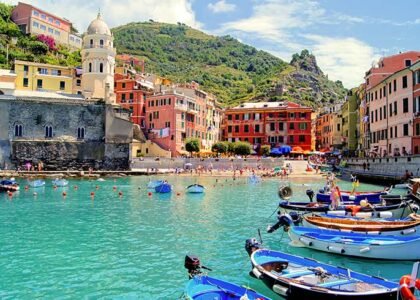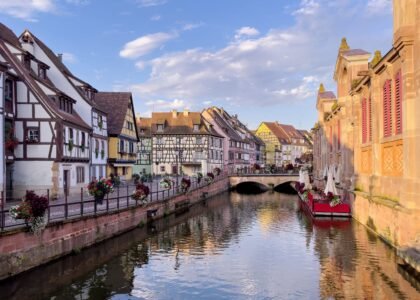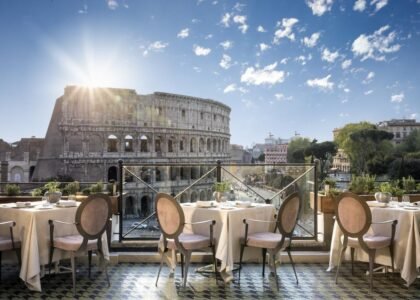
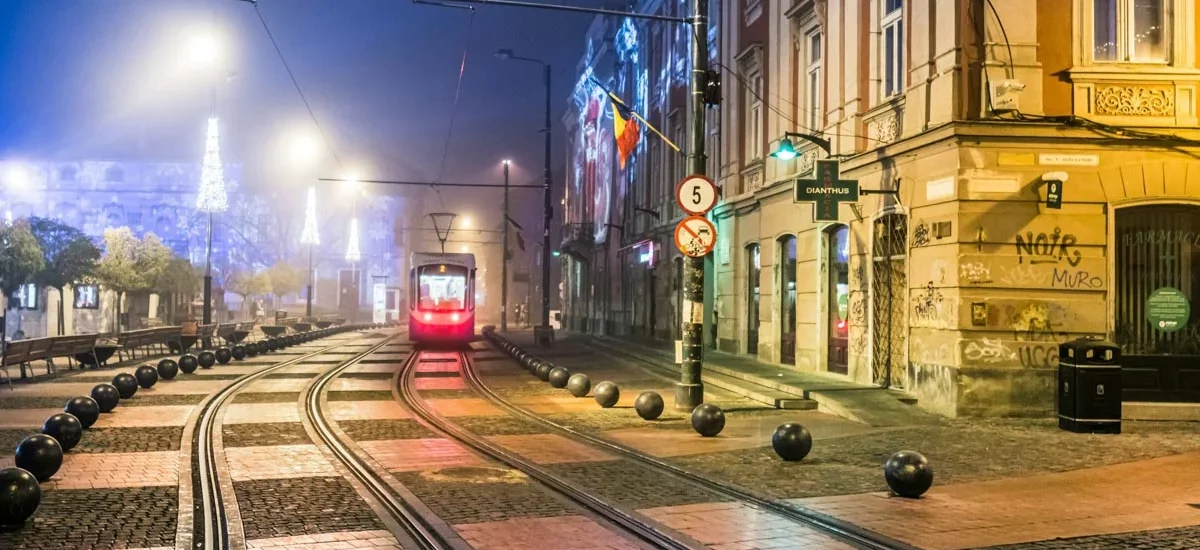
Everyone of us is born to possess two maps. The outer one is the map of the world a huge and complex map of continents, oceans, cities, and streets which we are being taught to read since our childhood. Into its capitals we learn, into its boundaries we trace and to its exotic locales we dream. However, there is another map that is more complicated and yet much more mystical we have inside us that is a map of the inner landscape of the self. It is a land of undiscovered feelings, lost memories, untested beliefs and latent powers. We can spend a life time concentrating on where we are on the outside map, yet it is exploration of this inner map that will determine the quality of our travel. It is maybe an even more direct and strong way(s) to do this quest called solo traveling. To abandon the things you already know and consciously venture into the previously uncharted territory, with not a soul besides your own to guide you, is to make the most phenomenal contribution to cartography. It is the choice to reject the already well-known place with its colorful and chaotic details and relationships like my home city of Lahore, and to start to explore the even more multifaceted landscape of the soul.
The pilgrimage does not start where it may be possible to cross a border or move through an airport terminal, but with the border of psychic departure, which may be called the Coast of Disorientation. This is first, shocking stage of breaking the cords which has long been holding our identity. We define ourselves in terms of what we do: a working person, also with a certain name, a child with family responsibilities, and a friend included in a certain social group. These roles (although they are restrictive in certain cases) offer a very strong sense of identity. These are the stable landmarks within which we orient ourselves in day to day life. This whole system is dismantled through solo travel systematically. In an instant, the job title falls into insignificance, the social status becomes redundant and the network of expectations, which has influenced your behaviour so far, disappears. The result is that you are made to feel identity-naked. As you stand in an unfamiliar airport, where all of the signs are in a form of text which you are completely unable to read and all of the people are talking amongst themselves in a way you do not understand; the question, Who Am I? is no longer an abstraction, but is pressing and practical reality. The first stage is usually characterized by a powerful mixture of thrill and horror, an existential buyer remorse. The freedom you have can be more than you can bear and more like a burden of the world to overcome. This loss of orientation is the initial milestone on the internal map, it is the beginning where one has to start self-discovery. It is the inevitable movement of being lost so that you may be able to start with finding yourself.
When the first shock began to wear off you wash up on the Plains of Amplified Sensation. Our senses are usually dulled in our everyday life, softened through the clamour of our own thoughts, the intervening between ourselves and what we see and hear. Viewing the world is like adding a layer to our conversation, common opinion and distraction. This filter is done away with when you travel alone. There is a mad dash of the world that almost has an overwhelming presence. The mere experience of having a meal turns into a vivid experience of the senses. You are not simply trying a new meal, you are minding all the details of its flavour as it came as a shock, the way a particular vegetable feels, how it was prepared as you do not have a chat to pirate your attention. you pass a street, and you really observe it only the first time. You see the details in a tile, the very tone of a peeling paint on a door, the tired smile on an old woman face. The sound pattern such as the one present here in Lahore changes to become a symphony. You also get to know how to identify the various beats of the clockwork that is traffic, the peculiar jargon that street vendors speak and the rhythm of a foreign language. This increased conscious sensory awareness is in a way forced awareness. It tears you and beautifully drags you back into the present. It is your new foothold in physical reality and that new foothold in the physical realm of human flesh is the reverse of a life that is too much in the abstract realm of television and time planning.
Out of these plains the course naturally takes the direction of the Canyon of Solitude, or the Echoing Canyon. This is the essence of the inner journey, and usually is the most difficult landscape. A very important difference between loneliness which is an anesthetic state of unconnection and solitude which is the receptive and fecund unity with yourself. The individual tourist will have them both. Pangs of loneliness are flesh and blood to the core-sitting alone and having dinner on the tenth consecutive night in a row, watching a beautiful sunset, and having no one to share those moments with. However, breaking through these instances results in discovery of loneliness to the nth degree. This is where you finally meet yourself, face to face, after so many years, which, in fact, is always a rather embarrassing encounter. When there are no other distractions at all, the voices that we have in our head are screaming at me and you can not close your ears to it. It is the inner critic, the voice that tells you of your past presumed failures, and of your future insecurities, and it usually is the first voice that comes to the foreground. This voice cannot go anywhere in the silence of a cheap hotel room halfway across the world. The first conflict is gigantic. However, along with time another skill is acquired the skill of observation. You are shown to bear witness to this voice without actually being it. You basically see it as a scared, habituated part of you which you are depriving of authority.
This leaves room to find other more genuine aspects of your self. You start separating the belief you have always had with the one which you want to believe consciously. You dig up the suppositions which are passed-down upon you by your family and your culture and place them in the light of what your own experience tells you. It is here in this canyon, that you learn to be your own friend. You get to be your own connoisseur when it is time to put yourself in a good mood after being upset, when you have to pep yourself up after feeling too weak, and when you feel like rejoicing after little successes without the necessity to find an applause of others. You learn that the only person that you will be able to count upon is a person that is already there. This crafting of a kind, strong bond with you is the greatest souvenir you will ever carry with you home after every travel.
Self-confidence developed in the canyon is then put to challenge and cemented in the Forge of Self-Reliance. Independent travel is the unending game of logistical puzzles and unsuspected adventures. It is an expedient, practical mastercourse in competence. You get to understand how to work in a big disorganized city with a falling apart map. You are able to negotiate with a medical need previously through the use of hand gestures and a phrasebook. You learn to budget like a pro is, to look out for cons, to read the unwritten social rules of a strange world. Every means you find yourself, every case you learn to handle yourself, small as it may be, is an item of empirical evidence that you are an actor, and capable and clever. It is another type of confidence compared to the type that is developed as a result of academic or professional achievement. It derives neither of theory nor of outside confirmation; it is part of the blood, part of cell-knowledge. It is the silent, unmoved strength of having the knowledge that you can be placed in the middle of anywhere in the world and you will not only make it but you will find some manner of making it work. It is a self trust so profound that upon it a bolder living is constructed.
Days and weeks run into each other and you find yourself in the River of Time and Memory. Travelling alone totally misinterprets your time sense. Time breaks loose with the strict 9 to 5 work rhythm and the unchanging working hours of calendar events, and becomes flexible and elastic. One day when you have so many new things, challenges and sensations can seem so long and full like a month in your homeland. On the other hand, seven days that one spends to rest in one peaceful location can pass by in some hedonistic bubble of time. You grow to live with the sun and your own internal clocks as opposed to the time. This new time relationship means that there is another relationship with your past. The hours of long, unorganized travelling by bus, train or on the lonely walk gives the person the room to think of deeper things. Your past is going to come back to you with unexpected focus, and at the level of distance, you can observe differently. Old relationships can be re-considered, old wounds are forgiven, own understanding of how it happened to them is written with a novel tenderness and clarity. You become a patient historian of your actual life, where you recatalogue your past, in a manner that liberates your future.
There is something ironical about a solo trip and how it can teach you many things about connection. The Archipelago of Connection is the realm of the very temporary, yet frequently meaningful human encounters that you enter into after having found your way down into the depths of your own solitude. Road relationships are not the same as your back home ties. They dispossessed of common past, social duty and humankind anticipation. This disinterest develops an opportunity to be brutally honest. It is possible to be more open and vulnerable in a conversation that you have with a stranger in a hostel than you would with any of your friends whom you have known many years. It is connecting with somebody in that moment as he/she is. Also, you learn the greatness and humility of strangers and their kindness. The family which shares with you their food, the individual, who takes a twenty minute detour to escort you to the correct bus stop, these are the situations that restore your faith in humanity. You discover that even though we have such enormous differences in the sense of culture, language and circumstances, we somehow share a human as we share a fundamental decency. You join an international, informal tribe of like-minded travelers, a tribe that does not exist in space, but no longer in time; a tribe of fellow spirits of wanderlust.
No matter how many months you may spend on vacation or how many years you may be on the road, you finally get the Summit of Perspective. This is not any place, but a mental position where you look differently at yourself and the world. This is a perspective of being humble. After having observed the vastness of the world, the variety of cultures of the world, and the immense durability of its individuals and people, your problems and your ego become small. You get to realize your importance as a small segment and yet an interconnected part of an immense and complicated human tapestry. You also acquire a different definition of a home. You quickly come to understand that home is not about the place you have lived in and grown up or the city you have embossed on your passport. Home is a state in the mind. The comfortability in one skin; that you are now able to carry with you everywhere. You know, how to feel at home yourself, and the result is that you may be at home everywhere in the world. The new way of looking will be the end result of the inner movement.
The last and what is usually the most difficult could be the territory of Return. Your traveling is not over once you get off the airplane at the airport of your hometown. Coming back to a non-evolved setting with a new self is a delicate and at times painful procedure. You make your pilgrimage, get back to home with your inner geography totally re-charted just to discover that you find nothing equivalent that has changed in the outer world of your previous existence. Their problems can appear irrelevant, and life tormenting. What you have to do is learn how to express in a language intelligible to other people what is above all inexpressible, and this very often is not possible. The most difficult thing is not to fall back into your habits, to not allow the dynamic, energetic and global human being you are on the road to be swallowed up by the less adventurous, routine-bound person you were before you went. You have to live by the new map of your life in the old territory by effort each day. What you have to do is to translate the view of the summit into the valleys of your everyday life. This is the last step of the journey: to make sure that the solo travelling is taken serious and it was not just another trip into the emotional escape, but rather a permanent metamorphosis, a redrawing of your internal world that would enable you to feel and perceive all future landscapes, both inside and out, with wisdom, courage, and a limitless belief in the wonders of the physical world.
All this making civilised existence on the new map in the old territory is where the real transformation of the journey is. It is a gradual, usually vexing and an intimate process of incorporation. Lessons in the raw desolation of a mountain path or the frenetic anonymity of a new city has to be transferred to the social fabric of home which is subtle and complex. In a place like Lahore, a city which has lived on close ties and a common history, this integration requires as adroit a form of diplomacy as is acquired at a border post. You cannot just proclaim your change, you have to be able to carry it out by living it, carrying the changes in a manner that is original to you, but still sensitive to the situation that you are coming back to. It is actually the entry point to how to do the code switching without losing your center. Incredibly, it is just as hard to observe and figure out a formal family dinner, in all its implied manners of behavior and expectations, as it is a foreign culture. You are not losing the person that you became you are merely learning to say the person in a new dialect. The boundary that could have been established by a blunt no to some stranger on the road has been established by a subtle but firm I won t be able to but thank you thinking about me to a relative. The same principle is applied, which is safeguarding your time and energy, but adjusted to the environment. It is the ability of being a river that runs round the rocks that is underway and never loses the unicity of its current.
This silent revolution to start with and in the first place transforms your relationships. You discover that some old friendships were based upon an image of you which no longer existed. They were the convenience friendships or the friendships of common circumstance or were founded on a relationship of a certain more passive place in which you had to occupy. Some of these relationships may naturally and silently die as you live more and more out of your new more genuine center. This is a loss and a freedom. It allows a room to be established on the basis of new relationships, ones that are attracted to you now. The fact that these new friendships are based not only on the elements of common shared past but also on the elements of commonality of values often results in having a stronger and more sustainable experience of connectedness. You even change radically in the way you deal with the matter of romantic partnership. The completeness you have nurtured on the inside leaves you not vulnerable to the type of relationship that is conceived out of the fear to be alone. The list of requirements of a worthy mate: social position, physical appearance, wealth is gone and substituted by much less complex, yet much more challenging requirement: Does this person appreciate my independence? Are they a well-developed, sophisticated, internal personal geography? Can we be quiet together please. What you are searching is a companion of life, a free person with whom you can wander side-by-side with instead of one needed by you to be a full person.
The most complex dance is family dance. The family is the main stronghold of everything in the collectivist culture, a strength and stress as big as it is, at the same time. The returning adventurer needs to know how to respect this relationship without being engulfed in it. It is a fragile affair of attending to your family, so that you love them so much and at the same time you are feeling your own person. It is about, being present in the traditions of families and enjoying them but taking a respectful stand not to be carried away by them. It is enough about treating them with respect by listening to their advice and concerns but not forcing your inner master of direction to dictate the decisions you make in your life by following your own hard earned inner compass. This is your highest bargaining kind of diplomacy you ever exercise, and that it too needs huge amount of patience, love and a silent, indomitable faith in your way.
It is also the remedy of the disease of perfectionism as the long and usually painful experience in solo travel helps to overcome the disease of perfectionism. By definition, a multi-month venture, run solo, is a work of flaws. It is a series of clumsiness, wrong judgments and humbling moments. You will take the wrong bus, overpay a souvenir, say something in a way that leads to uproarious laughter and, of course be hopelessly lost more than you will be able to count. You learn in the road that they are not failures but rather they are part of the process. They are the stories you will say in future, the times when most unexpected learning and growing happened. This is an embodiment of knowledge, that errors are not lethal, but actually fundamental, is a super power when you bring it down into your career as well as your life. You are less fearful to fail in what you have attempted to do. You will be more willing to release the 80% ready project, than wait 100% which never comes as a myth. Criticism does not affect you so devastatingly since you no longer associate your self-worth with a perfect performance. Now you have accepted the imperfection, now you have freed yourself to be more creative, more bold and also more strong than before.
This tolerance of not being perfect also transfers to the way you perceive yourself. The pilgrimage brutally swaches the illusion of the most perfect self. Each of you has some image of what he or she would be like, given the chance, better disciplined, more charismatic, more adventurous. When you travel alone, you are forced to spend enormous time with your true self, with all its shortcomings, moods, and weaknesses. You are not able to miss your own laziness, your moments of malice, your irrational fears. You find yourself in a room with them and even months passed by. By this continual, inevitable encounters, you get to come to terms with them. You know how to deal with them sympathetically and in humour. You stop the tiring business of attempting to be a perfect ideal and engage in a far more gratifying endeavor of trying to become a more superior and united version of your true, but flawed, self. This self love and acceptance is possibly the most peaceful will that a human being can ever discover.
The individual that has befriended his or her own aloneness is returning to the society a gift it urgently needs, perhaps the most precious gift of all in the frantic, anxious, screaming world: the gift of stillness. Being incapable of fear after having gone through much more serious fears without anyone, you have a higher panicking temperature. You are the steadfast eye of the tornado that is a workplace crisis, your vision having been expanded by knowledge of more corporate traumatic events do not in the overall scope of things count as a true crisis. The folks around you can be so anchored by your presence. In social situations, you are fine with the lack of language flow of the conversation and you do not experience the urge to cover all silence with noise. Whenever you can be simply present, minus the anxiety, you can make an entire room calm down. A place of the Lahore, where you are living life at a high and even frenetic pace, your calm, centered energy will be a small oasis to your friends and family and that mindfulness-like state that you take on almost unconsciously by just existing.
As these principles become ingrained with time, they assume a perfect culmination in the form of a gorgeous change. The internal and the external maps start becoming one common map. There is no difference between your travel self and your home self anymore. Your identity in the world is brought together. You treat curiosity and observational skill that you used to find your way through the streets of a new city equally to figure your way through a conversation with a tough relative. You tackle a tricky situation at work with the same adaptable attitude of solving a problem that you once did when your bus had broken down in the middle of nowhere. The compassion that you have been taught towards others who belong to other cultures is that which is used to perceive your fellow neighbours, workmates, and family members. And more than anything else it’s on this journey that you come to understand that the journey itself was never about leaving your life so much as living it fully.
The great undertaking of mapping the agency stems is of course never complete. The map is constantly changed, new land being found all the time. Yet you are in a higher level of achievement. Now you are not merely a cartographer, and mapping quietly and carefully the map; you are now an instinctive sailor, capable of tracing a route through any land, that of the spirit or that of the world, with wit, with bravery, and with grace. The goal of the wanderings was not acquisition of a set of places visited, but the creation of a place in yourself, a place of strength and serenity and authenticity that you can always seek home in. When you are in the comfort of your own room, in your own city you become aware that you are precisely concentrated right in your own world, yet merely a small, yet a delightful constituent of an even larger world. The destination and the voyage have both merged to become the same entity, and your life is the big adventure which has been occurring.