Lahore, Punjab, Thursday July, 11, 2025, 1.44 PM. outside is a thick shimmering blanket of heat. The Lahori summer is at its core, and the world shrinks as a place that escapes the blazing sun. The life of the city is now confined in just one monotone sound: the roar of air conditioners. Through the lens of the office and home, through the double-glazed windows (brought in because of the high energy consumption associated with single-glazing), the world outside can be seen as a bleached, overexposed photograph, there to be crossed or passed as quickly as possible in the climate-controlled cocoon of a vehicle. We have turned into an indoor species which just hides away in its own world isolated to the world in which we were born. We think we are making life comfortable, yet we are creating the cages of gold, we are not only enhancing it against the warmth, but also against life.
Along with this a change. The constant blue of the sky is then starting to bruise. There is a little breeze, the first of weeks, that moves the languid neem-leaves. A fleet of beautiful, huckleberry-cultured clouds, from the west, is coming towards us, with its undersides in an enticed, diaphanous light. The steady hum of the AC is canceled out by a more vibrating beat: a low, drum like echoing. The world exterior is not a fixed picture anymore; it is a performing drama. It is an invitation running out through the infinite, dramatic power of nature. It wants us to perform a task that will be nearly subversive in our contemporary, airtight lives: it wants us to just listen. So as to bask in its magnificent, fear giving and life enhancing manifestation.
The expression, Enjoy the beautiful Nature, may seem to be a bit late, not insignificant phrase, stitched to a pillar or stuck to a calendar. Paradoxically, though, it may be the most relevant, and critical, even downright necessary piece of advice that we could ever get in our contemporary reality. It is a recipe to a rooted malady of the soul, malady created by our deep and constantly growing alienation of the non-human world. What we have forgotten is that our minds, our bodies, our spirits do not exist apart from our environment; they are permeable, continuously formed and informed by the air we all breathe, the light we observe and the earth on which our feet stand. Learning how to enjoy nature again is to step into the process of re-enchantment, to regain a very basic element of our humanness which we have recklessly, banally, lost.
Our alienation with nature is a silent crisis, which does not shout in headlines but is thousands of ways subtle. We have been diagnosed to be experiencing the so-called Nature-Deficit Disorder, a disorder that does not only affect children but also the society as a whole, as already described by the author Richard Louv. The symptoms of it are everywhere: the ever-increasing levels of anxiety and depression, a lower ability to concentrate and marvel, a blunting of the sensory capacities, and a general feeling of being adrift, without an anchor to hold to, or any larger sense of connection than that of our own fears and desires.
No wonder that in such a large, ancient city as Lahore this shortage is especially heartbreaking. We live on a terrain which initially was characterized by its nature connection. The name itself of the Punjab is evidence of this rivers have been the life blood of this region since millenniums: the name of punjab meaning five waters. We have a natural lexicon in our culture; our poetry, since the days of the Sufi mystics, down to the latest poets, is a lushness of natural metaphor, the eagerness of the nightingale about the rose, the perseverance of the banyan tree, the wildness of the desert. The genius of the Mughals in landscape architecture created tantalizing gardens of paradise such as Shalimar which were more than just a park but rather a material representation of a spiritual ideal bringing to perfect truth the unity of man-made geometry and the wild flowered beauty of nature.
We, however who are the inheritors of this legacy, have become amnesiacs. Rather than being perceived as a holy life giving-string, the Ravi River is viewed as a convenient receptacle of industrial waste. Having old trees is not perceived as an opportunity to have a grand older person, but they are viewed as interruptions of road-widening plans. We live surrounded in a world of our own making, built around efficiency, concrete and concrete, leaving us separated again, this time not by geography but by politics.
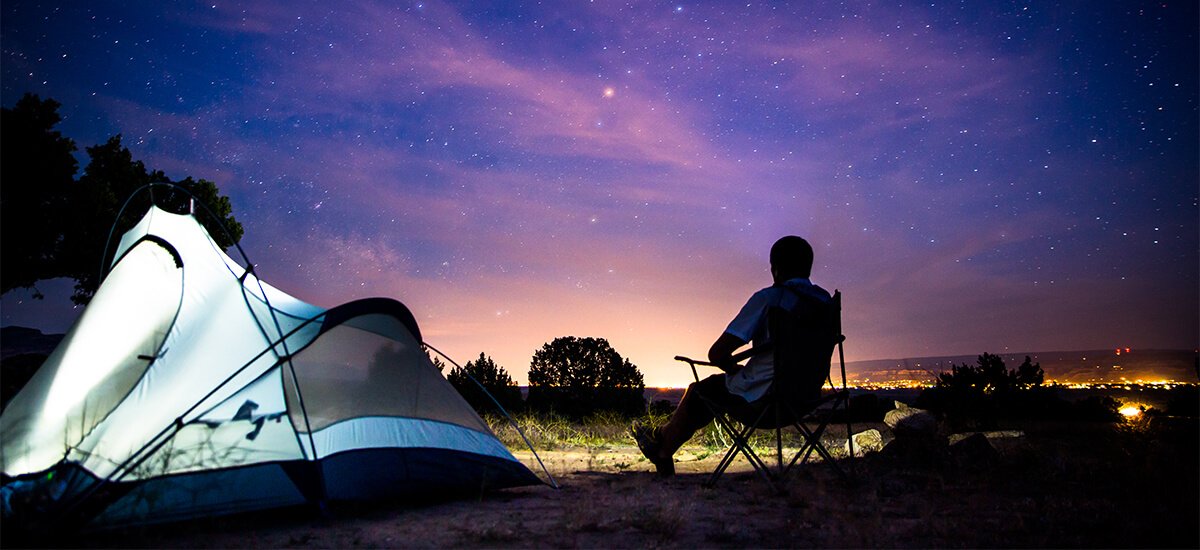
This is a physical disengagement coupled with an even worse psychological wall: the anesthetizing digital distraction. Inside our pockets we now have a simulated universe, a flow of infinite novelty that is highly organized to interest and keep us locked into it. This is a second nature loud, fast and maximally stimulating and in comparison with the real physical world, it may be described as slow, quiet and boring. The gradually, slowly opening of a fern frond is no match to the dopamine high of one thousand likes. The backlight of a monitor gives no chance to the faint light of the twilight. We are too preoccupied with editing and viewing an online version of life to remember to engage in life. Driven out of the rich, analogue data the natural world provides our senses with, our senses start to wither away. We lose all memory of the innocent, unutterable delight of walking with bare feet in cool grass, the reminiscent odour of the ground after the first rains–the mitti di khushboo to which the heart of every Punjabi has attained–or of the elevating sight of a sky crowded with stars, a vision that is in great part obliterated by the permanent orange glow of the urban street lights.
The sweet news is that it is a reversible condition. There is no lengthy and expensive pilgrimage, that cure, pursuant to which one has to come to a distant wilderness, but these pilgrimages themselves also have their boundless value. The procedure of reconnection will start here and now, in the central part of the city. Not geographical relocation is needed, but the shift of the perception is needed. It is the art of rediscovering the world and seeing it with the open awed eyes of a child. And here in midst of a scorching July, the monsoon is our best master.
The monsoon does not come in a polite way. It is an element of nature that breaks our complacency. the dust cleans off the leaves and makes them a very bright, almost electric, green. It purifies the air and air that we breathe is fresh enough and we breathe deep after months. It breaks our mechanical buzz with its rooftop percussion drumming and insists that we make attention. The monsoon is a baptism of senses; it is a major, and humbling, reminder that we (human beings) are servants to something more powerful and ancient than we are. It is the ideal trigger of awakening.
To live amid nature in the city, is to be a connoisseur of the microcosm, to be one who seeks the little wonders. It is the act of micro-dosing nature, and it exists even in the most unpredictable of locations. First of all the sky. Enclosed as we are in the canyons of buildings, we tend to forget that we are on the bottom of infinite ocean of air. The sky of Lahore is a pictorial scene of amazing velvet. To daily dedicate five minutes to observing the clouds, how they form, the way they travel, how they disperse, is a meditation practice. It is to behold architecture of the wind.
Next, learn the names and stories of your non-human neighbours. Look for the resilient flora that thrives amidst the concrete. The ancient Banyan tree (Bargad) in the centre of a roundabout is not just a tree; it is a historical witness, a complex ecosystem that provides shade, shelter, and a sense of continuity. Its tangled aerial roots speak of age and wisdom. The bougainvillea, spilling over compound walls in audacious bursts of magenta and crimson, is a lesson in defiant joy, a splash of untamed colour in a monochrome world. The Neem tree, with its medicinal leaves and bitter scent, is a silent, benevolent physician, a part of our indigenous pharmacology for centuries. To know them is to see them not as generic greenery, but as individuals, as characters in the story of our city.
The same is true for the urban fauna. We may not have lions and tigers, but we have a vibrant ecosystem of creatures who have adapted to our world with remarkable ingenuity. Watch the crows. Observe their intelligence, their complex social structures, their sheer audacity. They are masters of survival. Look up and see the effortless glide of the Black Kites, riding the thermal currents with a grace that defies the chaos below. After the rain, notice the frantic, purposeful work of the ants, the sudden appearance of the earthworms, the iridescent flash of a dragonfly. To pay attention to these humble creatures is to realize that the world is teeming with a life and a drama that is entirely separate from our own, a discovery that is both humbling and profoundly liberating.
The only way to be able to appreciate nature is to go beyond the shallow perception of consumerism where you take your selfie and pack; where you come and go. An enriched pleasure necessarily brings curiosity, knowledge and finally, awestruck. Here is the point where science and spirituality are marvellously united.
Science is now supporting what poets and mystics have always knew. Nature is a sensory experience, and this contact with the natural world produces significant positive effects and outcomes. Shinrin-yoku or forest bathing is a Japanese practice, which has been proven to decrease cortisol (the stress hormone), decrease blood pressure, and increase the immune system. Fractal geometry as it occurs in nature, in the shape of a fern, a snowflake or a river delta, is just fine to our brains, as humans, charming our minds and making us mentally refreshed. Neurologically, time in nature calm the Default Mode Network, the section of our brain making up the self-referential thinking process; this is stimulated when we engage in a sense of awe. That is to say the nature brings us out of our heads. It leaves the ego in dissolution, however briefly, and it leaves whatever personal problems we have paling in comparison with the universe.
Our culture is not the first to think of this idea. It is going back to an indigenous wisdom which we have forgotten. Nature served the Sufi poets as a mirror of the divine. To them, the beauty of a rose, was not only a flower, but a glimpse of a timeless divine beauty. The nightingale wounded song was the lamentation of the soul calling after its own maker. To delight in nature (in this sense) was to worship, to interpret the characters of God in the book of creation. The Mughal gardens were not only recreational parks, but they were terrestrial models of heaven.
And when we come to this wherein we are still deeply, usefully and solemnly delighted, a last and most important change takes place. Our passivity as consumers of the beautiful nature transforms to a more active role in the welfare of nature. Liking transforms into love and this cannot be without some sort of responsibility. It is impossibility to love something and not do anything, just to be the only one witnessing its destruction.
This is the moral requirement which our reconciliation with nature requires. On falling in love with the birds of Lahore, one will become very worried about the air pollution of the birds. When one man then takes vengance on the tree, and falls upon it with his axe, there is a chill of indignation, when one is intended, there is a bitterness of heart at the destruction of the other. The memory of the five rivers is to be taken flight by the pollution of the rivers. Certainly genuine enjoyment is not a flight from the problems of the world; on the contrary it is the mighty plunge into the problems of the world, and it is a plunge of love and protection.
It does not need any heroic deeds of stewardship. It starts through modest, holy actions. It is an activity of planting a tree and taking care of it. It is the study of minimizing our consumption and wastes. It is the voice to be heard when it comes to saving a local park or area of green. There is the pleasure of making a child learn about a bird or to plant a seed to give the next generation the gift of contact. It is knowing that we do not employ nature, we are a part of its complex and mutually reinforcing world. to preserve it is to keep us safe.
The storm of the monsoon is over. The sun comes out in the late afternoon as it disperses the clouds and the world was washed clean, sparkling and new. It is a cool, and fresh air, smelling of wet earth, and fresh flowers. The invitation is again repeated. You do not have to go somewhere to see nature. Here is where it is right. It exists in the everlasting weed growing between the crack of the pavement. It is in the spider that you have a masterpiece in your balcony. It comes with the greatness of the clouds in the sky and the sensation of that cool wind that runs over your body.
To appreciate its beauty is to accept this open invitation which never stops. It is to come out of our self-constructed concrete and distraction zones, to rekindle our senses, to review and redimensionalize where we belong in the large and expanding narrative of living. it is to discover a beauty which approaches the holy, and in discovering it, to recover the road to the most genuine and happy in us. The distance is short. No further than be yond the window nearest to you. Open it. The rest of the world is at its disposal.