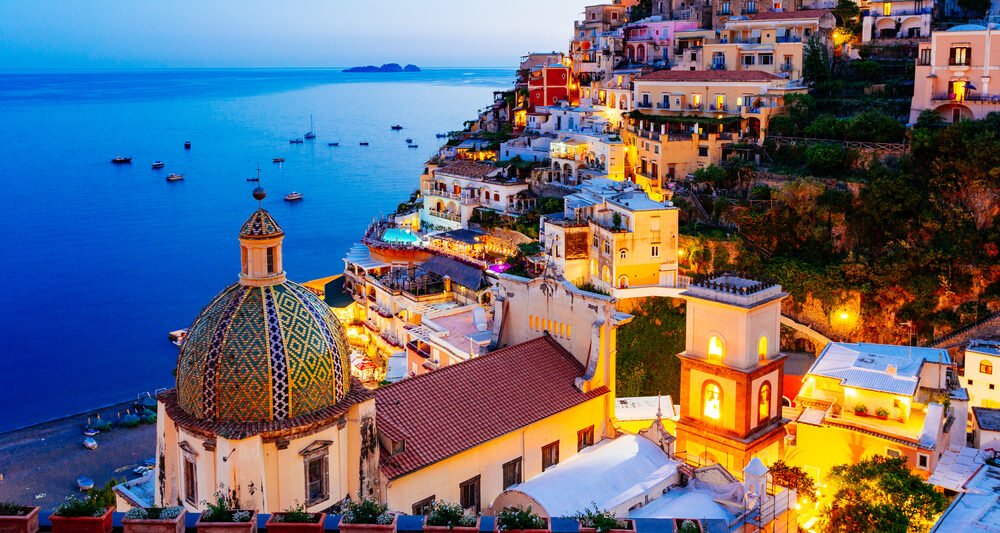
Italy is the dream with a lot of strength, defined by the centuries of arts, literature and films. It is a dream of sun-kissed mornings in sunlit piazza sipping a cappuccino, of strolling over cobblestone streets engulfed in vines, of protracted long lascivious lunches under a Tuscan sun. We pursue this fantasy to the other side of the world, and we are all too likely to make a very different discovery: an oppressive mob of tourists clogging around the Trevi Fountain, the two-hour line slogging in a heat wave to the Uffizi Gallery, a flood of selfie sticks in the way of the Grand Canal. During the peak summer season the most popular places of the country turn out to be not so much a cultural pilgrimage as a human traffic jam. One can start feeling downhearted, start asking themselves whether the real, peaceful Italy we always wish to be in has been lost already and is now being all gussied up and marketed as a theme park incarnation of the very same thing. However I am here to tell you that it is not lost. The Italy that talks, and does not shout is still very much there. It is only a few steps away from the main tourist artery, a different month, a different valley, or many other things still or it is only a different state of mind. The thing is that escaping the crowds is not about making the effort to miss the beauty of Italy, it is just about the way to make it become in the purest and the undiluted state. It is an art and just as any art can be acquired, rehearsed and polished.
The calendar can be considered as the first and most powerful weapon in your working arsenal. The biggest trap that any visitor can fall into is believing the idea that Italy is a summer destination only. Going at any time June to August will ensure that you are sharing the country with the rest of the world, and paying over the top prices to have the privilege to see and do everything at its peak of congestion. Magic comes out in the shoulders. Suppose that you come in late April or May. The country-side is bursting into a riot of green and wild flowers, and the air is not over warm but refreshing, and the cities are coming out of their winter sleep with an air of hopefulness. The people are less, the people are more calm before the summer crush, and the golden light of the end of spring makes the whole things look even more attractive. Picture Italy, now, in the end of September or in October. The heat was sweltering, but now the hue was changed into a cool refreshing warmth. The grapes are being harvested, or, as it is termed in Italy, the vendemmia is in progress, and the excitement is great in the wine-growing districts. A feeling of peace once more prevails and the crowds have greatly diminished. In Pompeii you have time to ramble through the ruins, in a cafe, in Siena, you can take your time to find a quiet corner, and you appreciate the autumnal tints, in which landscape is ignited in flames. In order to go further with this approach, one might mention a secret season: winter. During the November-March season, which does not feature the Christmas and Carnival holidays, you can find yourself alone in one of the museum galleries. The Venice canals with a haze of romanticism are an encounter of intense melancholic beauty. A winter, when Roman is so cold it is an ideal pretext to three hours loafing in a warm trattoria over a plateful of rich pasta. It is the winter light, low and sharp, which lends to the old stones a change of character, a more solemn and solemn and grandeur. By rearranging your dates of travel by merely a few days you are not only shunning out people but you are instead picking up on an actual, atmospheric and comfortable Italian affair.
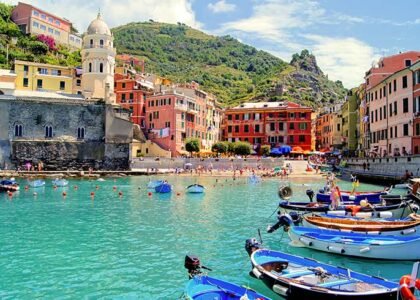
Now that you have your time down, the next thing is a geographic one. Its based on a very simple, yet paradigm shifting principle that I refer to as the one step over rule. You do not need to go to where the herd is or as the rest of the world knows it but just move a step aside in the map. You will discover that the very character that you want, the beauty, that food you craved to get, the history you were looking for is all there, without the crowds and the commercialism. Does your heart singularly beat to the rolling hills and cypress lined thoroughfares of Tuscany? Make a step above to Umbria. Umbria is called the Green Heart of Italy, because it has all the medieval hill towns, amazing food, and exquisite scenery that Tuscany has, just with much fewer tourists. and in the place of those groups in Florence, you may visit animated, historic university town of Perugia. In place of the unending army of tour buses in San Gimignano, find the floral-laden lanes of Spello or the sheer cliff city of Orvieto which has one of the most spectacular cathedrals in all Italy. The coast is also the same reasoning. Do you dream of Amalfi Coast? Cross the border to the Cilento Coast, a preserved national park and the scene of fresh golden beaches, old Greek monuments of Paestum and picturesque fishing villages where time passes a little slower. Have you ever had Cinque Terre in your list? Rather than walk with a line of other hikers in the single file in the main trails, head to other equally lovely but just so much quieter parts of the Ligurian coast to the east of Lerici and the so-named “Gulf of Poets” or to the west of towns such as Camogli. This little thing of turning around your compass opens a newer, more intimate and relaxed form of your Italian dream.
This step-by-step traverse may take you to whole areas that are still inexplicably undiscovered by the tour bus pack, but whose riches just cannot be matched in the better known spots. Take an example of Le Marche, a territory that is nudged between the Apennine Mountains and the Adriatic coast. It is frequently said itself by Italian people that it is all of Italy in one region and all this is true. It has a beautiful coastline, the Conero Riviera, of white cliffs dropping down into turquoise sea. It is mountainous with dramatic scenes in Sibillini national park. and it is the birthplace of the master Raphael, and is the seat of the most perfect-preserved Rennaissance city of Urbino. Walking through the streets of Urbino is like a movie back to the 15 th century and you will be able to do this in relative tranquility. Even further down the South there is the great heel of the Italian boot: Puglia. It is the essence of the south, where ancient olive trees grow, whitewashed villages and a breath-taking coast that will make you take your breath away. This is where you will be able to visit Lecce, a city intoxicated with its wild Baroque architecture that it has been dubbed as the Florence of the South. Be awed by unique and pointy-roofed conical buildings called trulli around the area of Alberobello, but moreso, you can live in one on the less-touristy outskirts. And you can find out such coastal pearls as Polignano a Mare, sitting high on cliffs over the sea, or such historical port town as Otranto. Near Puglia is Basilicata that hosts the most unbelievable city of the world, Matera. Most of its Sassi (prehistoric cave houses dug into the rock) were used continuously over thousands of years. The stroll along its stone alleys in the early morning or in the evening is an unforgettable and almost religious experience. In north as well, there are substitutes. Rather than the glitz and hoop-la of Lake Como, the romantic Lake Orta with its idyllic island of San Giulio, or the Lake Iseo where it has been less developed. Rather than Milan as a city break, think of Turin, old capital of the Italian monarchy, its noble arcaded streets, palaces and great museum of Egyptian antiquities. Or go to the intriguing port of Trieste which is more like Vienna or Budapest than Italy and a reminder of when it was the principal port of the Austro-Hungarian Empire. These areas are not an alternative to the big destinations, they are the real deal, with a richness of culture, beauty and locality that is becoming more and more difficult to find in the popular destinations.
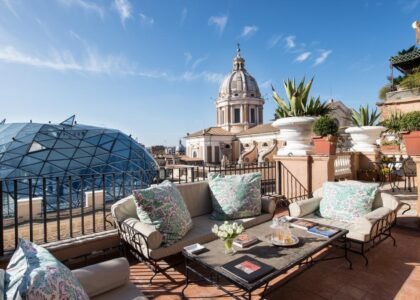
Naturally, to a number of first time travelers visiting Italy, the feel of not visiting any of the three (Rome, Florence, or Venice) would mean not taking a good oppurtunity. The positive bit of news is that there is an opportunity to avoid the crowds even in such renowned cities. It needs a tactical plan to your everyday routine and desire to discover some unexpected corners out of the main spots. Take the approach of early bird or night owl. Wake up your alarm and stand in St. Peter Square as the sun comes out, before the tour busses get there. You will share it with few nuns and locals in their way to work and the feeling of size and calm is breathtaking. The same can be said when one takes a hike through the streets in the middle of the night, when the day-trippers are already leaving the city behind. The Forum at Rome viewed in the moonlight upon the heights, is enchanted. The Trevi Fountain at 2AM is an absolutely new, special experience. During the day, intentionally take the trouble to avoid the gravity of the key attractions. In Florence go cross the river Arno to the Oltrarno district. Here is the artisan quarter of the city, where you may pop into a work place and observe bookbinders, leather toolers and mosaic makers at work. It is like a breathing, living city and not an open-air museum. And rather than competing with the masses in the capital city of Rome, turn off the beaten path into the picturesque narrow streets with ivy-draped buildings in the Monti district or the imperfectly perfect, un-scrubbed romantic atmosphere of Testaccio, where a gastro-geek spends its days, and nights. The way things work in Venice is that it is better to move away form Piazza San Marco. Move on to the calmer areas of Cannaregio where the locals of Venice reside or the large district of Castello that is full of history. Make a few random turns down dead-ends, over bridges whose names are unknown to anyone, and you will be rewarded with street scenes of everyday life, such as laundry hanging between the walls, people talking through their windows with their neighbours, that all seem a thousand miles away the tourist frenzy of only a few hundred metres. Plunge into the cultural attractions too. It is the amazing art collection of the Palazzo Doria Pamphilj in Rome rather than just the Vatican Museums. Rather than the Uffizi only, a morning with Michelangelo in the Bargello Museum in the city of Florence. These are globally exceptional sites, which only experience a small percentage of visitors.
And that, at the end of it all, escaping the crowds in Italy is not so much a matter of itinerary as a major change of what goes on in your head. It is a matter of getting over the check-list mindset of the tourist and having the curioust, wait-and-see mindset of the traveller. You may want to feel like visiting three cities within five days. Rather, consider one area and tour it gradually. The real Italian life, the so called dolce vita is never in a hurry. Get a car on rent and drive in the open country with no pre-determined destination. Pull in at the little cross-roads village which attracts your attention. Spend a whole afternoon in one of its main piazzas sipping wine and simply watching people pass by. It is also one of the most wonderful methods of experiencing this slower and truer Italy by staying in an agriturismo. These are operating farms which house visitors. Or you can be in a lovingly refurbished farmhouse in Sicily in lemon groves, or on a vineyard in Piedmont. It is extremely immersive. You will have access to amazing home-cooked food, which is usually cooked by that families so-called nonna with ingredients straight out your front door. It is a means to open doors to the land, the food and its producers. Last of all, make an attempt with the language. The level does not have to be high, but a few basic phrases would do a trick, such as Buongiorno, Buona sera, Per favore, Grazie, Parla inglese?. It transmutes you into active participant instead of passive consumer. It opens doors, beckons grins and it is the easiest means of indicating that you are not just visiting Italy but to be together with Italy. This is the secret in reality. Your Italy, your Italy, is there, on the still morning light through the walls of an Umbrian town, on some empty shore in Puglia, in a restaurant giving itself out to be a trattoria down some lost Roman back street. All you have to do is be willing to make that one more step to discover it.
And when you have started to understand the rhythm of the shoulder-seasons, and once stepped across the boundary a little into the quieter parts of Italy, you begin to see that being out of the crowds is not an end but a gate. It introduces a more microscopic approach to the vision of the country, an approach that departs no longer with regions, but with valleys, hidden coasts and even with the very philosophy of passage through the scenery. This is the second degree of exploring and you no longer think in terms of Tuscany or Sicily but in Val d Orcia or the Egadi islands. It is paying attention to the micro-territory and taking time to explore it on the level of detail it warrants. Take, as a case in point, the Aosta Valley, far away up in the northwest, a semi autonomous land where the French and the Italian intermingle. Its a land of fortress castles hanging on the sides of valleys, and flanked by some of the loftiest mountains in the Alps. Most people walk through to reach Mont Blanc, but it is the real stuff to stay and explore the side valleys, walks up to the remote alpine lakes and relish the rustic local fare of fontina cheese and cured meat. Or make a pilgrimage to the Val di Noto in the southeast of Sicily, a cluster of eight villages, among them Noto, Ragusa and Modica, all re-created in your face, lyrical and harmonious Sicilian Baroque style (after a great earthquake shortly before 1693). To spend a week sampling only these towns is to spend a week in a realm of golden-stoned buildings, balustrades on balustrades, perhaps the best chocolate you are ever likely to taste, and a million miles off the cruise ship tourists of Taormina.
Such micro-approach is possibly most fruitful applied in Italy, country of islands, an archipelago of secrets floating in the Mediterranean. There is much more than the popular islands of Capri or the enormity of Sardinia, there exist smaller, more personal sets of islands with a real sense of escapism. As an example one might take the Aeolian Islands, a volcanic group off the north coast of Sicily. Although the major attraction of the white island lipari attracts a lot of tourists, the true nature of the place is in the lesser known sisters. The greenest of the islands, Salina is a haven of food lovers, hikers, and of which there is a caper farm, Malvasia vineyards and the twin volcanic cones to climb. Panarea serves up a pinch of jet-set, bohemianism in micro form, the distant islands of Filicudi and Alicudi almost entirely cut off the modern world, and mules remain a main mode of transport and the sound of the sea is all you will ever hear. Egadi islands are in the west of Sicily. Rent a bicycle here, on Favignana, and spend your days cycling between one unlikely turquoise swimming place to the next, visit the surreal tufa quarries and discover the fiercely proud history of the locals and their tuna catch, called mattanza. Nearer to still, but frequently, at least amongst foreign travellers, forgotten, are the Pontine Islands, a favourite refuge to the Romans. Ponza is a more undressed, less glamorous, and less refined version of what visitors go on Capri to find: some breathtaking, chalky cliffs and fissures and caves you can only reach by boat. Selecting one of these smaller archipelagos as a destination, as opposed to the crowded islands, is not only avoiding the crowds, but entering their sealed world of its own unique culture, rhythm and time-tested relationship with the sea.
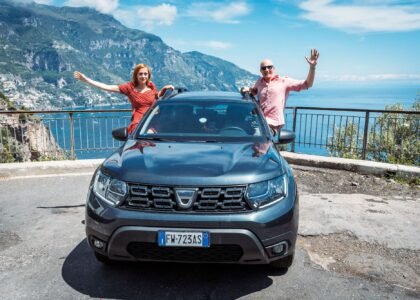
How you decide to proceed through this landscape is just as vital as your destination to the experience it will provide. The blindingly fast Frecciarossa trains that streak in and out of Italy, and it is extremely dangerous to use in this case, and it is extremely dangerous when you want to get on the Frecciarossa train at the speed of 360 kilometers an hour and get to Rome or Florence, the high-speed Frecciarossa trains of Italy are a marvelous invention of the modern world and are very comfortable and very fast, but like hermetically sealed tubes, they isolate you completely and that is exactly the problem, you are inside and outside everything is shocked. The real Italian soul of the travel lives on the so called Treno Regionale- slow regional train. These are your ticket of serendipity. They rattle over coastal road, through mountain valleys and they pull over in each small town and village. It is the faith-inspired deed of getting into a local train with an unconstrained destination not known but always repaid. You may just look out the window and see that the passing scenery is changing, hear the rhythm of local people speaking, and you may just get off at one of the stations just because the sound of the place of destination on the signboard just sounded interesting. On these slow trains you may find an undiscovered side of a lakeside town or a village where there is the celebration of a local occasion. Much more radical, however, is the choice to hire a car, because it is not a matter of convenience but a passport that opens the most secretive and rural Italy. A car guarantees you to enjoy that out-of-the-way azienda agricola with the fantastic vista, to locate that isolated terra stretta at the terminus of a crooked dirt track, and to go to the little hamlets perched on a hill which the bus will never ever get to. The fact is, you should rent a car as small as you comfortable with, and this will make managing the impossible-to-drive village roads a fun challenge and not a stressful nightmare, and to find out about the ZTLs (Zone a Traffico Limitato or Limited Traffic zoning) in the city centers so you do not get fined into bankruptcy. To the adventurers who are even more adventuresome in their intents, walking or biking ensures the most intense form of connection. Italy is covered by network of ancient pilgrim or shepherds paths such as the Via Francigena, passing across the Alps into Rome. With a little piece of such a path, to walk, is to perforce move at human speed, to get the country into focus and into old familiarity, and it is impossible to do so on any kind of vehicle.
Among the most fun and successful means to escape the hordes and get into the trenches of The Real Italy, the suggestion to leave anything guiding your feet go elsewhere, and literally to follow your stomach goes. Culinary traditions in the country are hyper-local and means that you are likely to take exotic and unexplored landscapes and villages on the way of their following a particular food or wine that you have tasted. Do not leave a general sightseeing trip of a territory. Fix a certain gastronomic adventure. You can, say, devote a visit to Emilia-Romagna with the aim of meeting the producer of its sacred trinity: Parmigiano-Reggiano, Prosciutto di Parma and the old balsamic vinegar of Modena. It will lead you to countryside dairies, curing houses in hills and family run ‘acetaie’ in sleepy towns that sets palatable tale in your journeys. The final manifestation of this local food culture is the so-called sagra the phenomenon most certainly at the heart of Italian life, though still nearly unvisited by tourists. A local food festival often spanning a weekend long and devoted to a single and specific product observed over the height of season is known as a sagra. Sagre are held on absolutely everything: wild boar, porcini mushrooms, truffles, chestnuts, cherries, wine, polenta and hundreds more of the local regional specialities. The experience that comes with attending a sagra is essentially being a part of all the other people in a village, sitting down at long shared tables and eating unbelievably good without any fuss kind of food and staggering around after local musicians, so much so that it really ends up being more about being involved in a genuine communal party that you could even forget. You may see them via advertisements on the posters scattered in the small towns or via checking the web-sites of the local municipal tourist offices. Here, sitting in a plastic cup of some local wine, drinking with someone you do not know, is where you will think that you are in a million miles away distance of the tourist traps of Florence.
On top of the two, the landscapes, and the food, there is another deeper level of connection, and that is the ability to immerse yourself in that culture, not as a spectator, but as a participant. This might be realised through acquisition of a new skill. Stop flying into a city only to visit it, make it a home. Take a one week intensive course in a small independent school in such a city as Bologna or Lecce. Not only will you get to be able to use better Italian, your teachers and students will give you insight as to the hidden secrets of the city. Try a practical cooking course, not a demonstration by a glitzy tourist kitchen, but in a house or a working farm called an agriturismo, where you will be taught time-honoured family recipes. In those cities where there have always been artisan traditions, such as Florence or Ravenna, then visit smaller workshops where classes in fresco painting, in leather than or in mosaic creation are offered. The experiences will not only give you a sense of structure to your days, but you will have a concrete skill to bring home, and you will also meet some real connections with local craftspeople. Still another means of getting a more in-depth experience of the culture is to pursue high culture in the provinces. Attending an opera at La Scala in Milan is an epic dream, yet all over Italy there are dozens of fantastic and historic opera houses in minor cities such as Parma, home of Verdi, or Palermo. When you go and watch a performance in one of these places it is a much more intimate and less expensive one. No tourists are present, outsiders solely being locals obsessed with opera, and the atmosphere of the occasion is exacerbated and completely genuine. In making the arts, this rule is applicable in all the arts. Search dispensable chamber music demonstrations in little churches, drop by the contemporary art establishments in the industrial urban communities in the north, and you will be compensated with international grade culture at an unwound setting and without packing the place. And, of course, all these tactics the micro-explorations, the slowness of transport, food adventures, and experiences in culture, it is about how your relationship with Italy changes. They are concerned with the notion of moving away to be a passive consumer of renowned destinations towards being an active, inquisitive and engaged tourist, making a personal experience rich in all of the silent, true, and memorable moments which are the actual essence of the Italian dream.