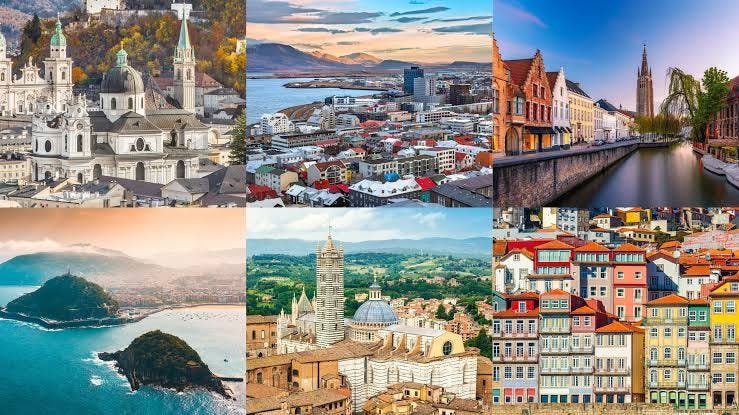
What was once a low-key subculture of a few adventurous programmers and authors has grown into a worldwide phenomenon, a mainstream dream of millions of people who want to free themselves of a fixed location. The world revolution on remote work has now changed our perception of the office forever by switching it to a virtual state that can be reached everywhere where there is a stable internet connection rather than it being a concrete location. This newfound freedom, however, presents a paradox of choice. Where do you choose to go when you are free to live and work anyplace? Are you searching to find the best country because you are in need of a good backdrop to your laptop, or is it more complicated than that? It is not only about working in a place where you can be productive but be a person flourishing in life, where you can have a balance between work and significant moments of life.
There are some important aspects to consider before deciding where to base while being a digital nomad and the optimal combination of them varies across the individuals. The most fundamental requirement is, of course, digital infrastructure. The great internet connectivity is the hard and fast prerequisite on which all of this kind of lifestyle is prided. More than that, the living expenses are the number one priority as it appears directly in your financial runway and the type of living you are able to afford. The other major issue which in 2025 is more important than ever is the visa situation. When the international talent race started, most countries created dedicated digital nomad visas, a clear-cut legal means of long-term residency that in the past was the grey zone of constant tourist visa extension runs. Last, but, by far, not the least, are the elements that are much more intangible but no less significant: the existence of a friendly society of like-minded nomads and expats, the level of safety and quality of life, the richness of the local culture, the quality of the food, and the opportunities in general to experience new ways of traveling. This holy grail of the modern remote worker is a country where the metrics stack up in numerous ways.
Sometimes in the pursuit of this perfect equilibrium, one lands up in the sun-kissed beaches of Portugal. The nation has etched itself well as the hub of the digital nomad movement in Europe, and with a very valid reason. It provides ideal trifecta of first-world facilities and infrastructure, fairly low cost of living of Western Europe, and unequalled quality of life. Beautiful cities such as Lisbon and Porto are playgrounds of culture and creativity, with an exploding technological industry, and enough warm cafes to work out of, and seemingly, historic-looking avenues. Its government has been extremely proactive, providing inexpensive long-stay programs, such as the D7 visa and the newer and more particular nomadic digital nomad visa, giving the remote worker a definite legal framework. This official welcome has created a huge and diverse nomad community and it is so easy to network, find friends and even settle.
Other than the hectic city dwelling of Lisbon, Portugal also has the beautiful coastline that makes it attractive. There is also Algarve in the south with its less frantic, beach lifestyle, including world class surfs and seaside havens including Lagos and Portimao. It is an internet-savvy community, and with year-round fine climate it draws a big number of people seeking relief of the colder climates up north. Be it the story-book, tram-haunted, capital, or the golden-crowned cliffs of the coast, Portugal has got a strong appeal. It is a nation that is welcoming and invigorating, that you can live with a good standard of life, feeding on piping hot sea food, top notch wine, quite scenic and a friendly social set up that you cannot get in other Western Europe countries at an unaffordable price.
As much as Portugal is the ideal entry point to Europe, another more dynamic and colorful energy beckons nomads to Latin America, and the gateway is Mexico. Formerly, Mexico has been a favorite tourist destination, and now that remote working is becoming more common, the country has boomed. One of its main attractions is that it has a very generous FMM (tourist permit) in that most citizens of most countries can now get up to 180 days of unrestricted stay and therefore they do have sufficient time to settle before a formal application of the visa is required. The unbelievable diversity of the country implies that there is an optimal place where every kind of nomad can be found. The city of Mexico, with its vast, urban sprawl and cosmopolitan metropolis, promises an array of first-rate restaurant options, an infinite number of museums and the promise of a creative, living energy. The Caribbean sea coast offers such towns as Playa del Carmen and Tulum, where a typical nomadic beach style is offered with a co-working space right beside the turquoise waters. Oaxaca city is a great alternative to those who need more cultural immersion and a slower pace of life: the city has a long indigenous history, and its gastronomic heritage is widely known.
The price of life in Mexico is much cheaper as compared to those in United States and Europe and one is able to live comfortably on a low budget. The internet infrastructure tends to be pretty good particularly in the longer standing nomad centers. But perhaps Mexico’s greatest asset is its culture. It is a warm, vivacious, and extremely historical and traditionally rich country. The chance to learn the language itself, to live in the nature of ancient ruins, and to enjoy one of greatest cuisines in the world makes Mexican living life a really inspiring experience. Both the group of expats and nomads have large and well-established communities, giving immediate social network to a new arrival.
The eternal nomad route used to shift quite radically from the colorful celebrations in Mexico to the tranquilities of South-East Asia after that, where the landscapes are peaceful, spiritual, and very cheap. Thailand, and the northern city of Chiang Mai in particular, is a pillar of the digital nomad movement that has been operating in the country for years. It was talked about the world over in terms of its ridiculously cheap cost of living where the typical comfort and modern living could be afforded and enjoyed at a fraction of what was required in the home country. This is a relatively low cost of living, coupled with high speed internet and the use of a notoriously friendly culture, that has enabled the initial cohorts of digital nomads to self fund their start-ups and stretch their wanderlust across the globe indefinitely. Nowadays, Chiang Mai is one of the premium destinations because it has an enormous and extremely well-organized community alongside an infinite number of co-working spaces and has a laid-back creative environment. Other islands of Thailand, such as Koh Phangan and Koh Lanta, have an alternative pace of life; they are wellness-oriented and born of wellness and yoga and beachside solutions facilities.
The island of Bali in Indonesia shares the throne of Southeast Asian nomad scene. Bali combines spirituality, the surf mentality, and business spirit. Idyllic towns such as Ubud which is a yoga and holistic wellness center and Canggu which is the hip and trendy surf and cafe town attract remote workers around the globe. The cafe culture on the island is unrivaled and features gorgeous, picture-perfect cafes providing both speciality coffee and nutritious food with a stable internet connection. The living standard is amazingly cheap, and the beauty of nature, be it volcanic, rice terraces or beautiful beaches is inevitably inspiring. Thailand and Indonesia have long followed what basically amounts to a visa run structure, but as the world changes and shifted in 2025, both nations are now offering an alternative of long-term visas–Thailand with its Long-Term Resident (LTR) visa and Indonesia with its Second Home visa as a building block to an increase of longer term residence of remote workers.
However, the traditional hubs are not the only ones left any more. It has been replaced by a new breed of destinations that grants unique insights and mind-blowing deals, and by far and away arguably the best of those is the revitalized city of MedellIN, Colombia. The city of Medellin that was once synonymous with violence has experienced a spectacular change to date, turning it into one of the most innovative, safer, and popular cities in the entire Latin America. Located in green valley it is known as the City of Eternal Spring because it enjoys almost perfect climate all year round. It has the lowest cost of living imaginable, the locals are known to be very friendly, cordial and the city is endowed with one of the best and efficient metro systems. The government has been quick to welcome the new global workforce with the Digital nomad visa set on launch this year. The nomadic population in districts such as El Poblado is flourishing, and the city is abounding with nightlife, the emerging food culture, and the culture of passion. Medellin is an example of remarkable optimism and regeneration and being in such an energy provides nomads with the opportunity to be there.
The same spirit of rebirth and possibilities can be felt in some corners of Eastern Europe, now a frontier to the nomads who want to access a rich history and an extremely low cost of living. Foremost in this trend is the state of Georgia. Its capital, Tbilisi, is the city of the most amazing contrasts where ancient stone churches and historic bathhouses can be found along with futuristic buildings and modern wine bars. One of the first and most liberal remote work initiatives to be introduced, correspondingly, was started by Georgian government, called “Remotely from Georgia”; according to it, citizens of many countries can live and work in the country visa-free within a year. Its cost of living is among the lowest in Europe; the culture of food and wine is both ancient and incredible; and there are some of the most dramatic landscapes of the Caucasus Mountains to explore with amazing opportunities of adventure. Georgia has a call to the man of wanderings who is also a man of journeys someone who will desire to dive into this very unique and very historic civilization taking advantage of a near non-imitative pleasures of access.
To find a more conventional and affordable grand European metropolis without the Western European price tag, then Budapest, Hungary is the right destination to be. The city of stunning architecture is the so called Pearl of the Danube, its spectacular Parliament building on the one hand and the adorable ruin bars established in once derelict buildings on the other hand. The cost of living is extremely reasonable, the internet is fast, and Hungary has a digital nomad visa, as well, called the White Card. The life in Budapest can be filled with cultural activities, ranging anywhere between visiting its numerous museums to spending time in its world-famous thermal baths, which have a long history all the way back to the roman times. It is also ideally situated in the centre and can be an excellent center point to either explore the rest of Central and Eastern Europe by train or cheap flights. On the same note, countries such as Romania provide an attractive offer that has cities like Bucharest and the fairytale landscapes of Transylvania and they provide internet that is among the fastest in the world and at a very low cost of living at that, which makes them appealing to nomads who are interested in getting off the more traveled road.
This orgy of choices is abetted by a worldwide sociological trend that has skyrocketed since the early 2020s: the formal acceptance of the remote employee. It is fact that governments around the world are realizing that location-independent professionals may be a cost-effective source of economic development because they inject money into local economies but do not compete with the locals. This has paved the way to a flow of digital nomad visas and long-term programs. Other nations such as Spain, Greece, Croatia, the UAE, Brazil and so many more have introduced programs that will bring in this moving talent pool. The formalization of previously more greynumeric status is something of an indication that digital nomads have achieved, and it is a defining moment in the digital nomad movement probably. It also gives an exotic community some sense of stability and legitimacy, letting the nomads plan their lives more confidently, to open local bank accounts, and become more a part of the chosen communities without the ever-present looming deadline of an expiring tourist visa.
The new age of choice and legitimacy also comes in with a new way of thinking. Being a digital nomad is no longer the reason to run after the lowest cost of life or track the most trendy destinations towards the busiest spots. As the abundance of choice can easily be combined with high-speed internet in the world, the best destination can now be determined through passion. A separate skier may decide to reside in Georgia or Bulgarian mountains. A scuba diver may choose the shores of Dahab in Egypt or Philippine islands. An ardent foodie will select the food scapes of Vietnam or Peru. A digital nomad in the present-day world has an unprecedented freedom of living a life that is not only centered around his work but around the interest that he or she is most passionate about. It is no longer the question to ask where it is cheap and connected. to “Where will I feel most alive?”.
After all, best country is a very personal endeavor, a trade-off between the demands of an inaccessible career and what the human heart wants. Right answer does not exist but only a row of trade-offs. Portugal, to one person, may be just what the doctor ordered and to another person, the bureaucracy may get on his/her nerves and he/she may want to fast track the bustling cities of Mexico City. Some nomad may find their niche in the social, health-conscious environment of Bali and another is yearning to seek the intellectual, historic solitude of a European capital city. In 2025 the beauty of this way of living is the huge variety of these options. The world has become opened as it has not been possible to imagine a decade before. Understanding your own priorities is even the most important step, as in what you really must be productive, happy and fulfilled. Now you are ready to start to learn about the miracle of diversity of countries, horizons, and peoples which are just waiting to become your next home office, your next neighborhood, and the next page of your life of freedom.
Finally the quest for the perfect country is as intimate as any inquiry can be, as individuals negotiate between the imperatives of a farflung career and the aspirations of a human soul. It is not that there is one right answer; there are just trade-offs. What suits one individual best and would give the right blend to that person, may only frustrate the other person by its bureaucracy and he/she may rather go to Mexico City and enjoy the Mexican type of craziness there. The same nomad would be happy with a social, wellness-oriented bubble like Bali, and another one would want to crave a historic, intellectual loneliness of a European capital. This lifestyle is lovely in 2025 just because the range of these choices is enormous. The world has become open in an aspect that it has never been imagined like by most of the people a decade ago. The key is to make sure that you first realize what your priorities are, what you need to have to be prolific, happy and contented with yourself. Out of there, you will be able to start researching the fantastic mosaic of cultures, geography, and people that will become your next home office, your next neighbourhood, and the next page in your whole life of freedom.
This is the actual art of the nomad life; that process of self-discovery, of fitting your own needs to the world-map of possibilities. And as the world is becoming open, the menu of options is increasingly more diverse, and is able to identify and accommodate a wider range of wallets, as well as lifecycle and more fundamental dreams. Once the bootstrapping process is over and the settled digital nomad is already generating a consistent, relatively well-paid income, their definition of best could change to be less cost of living orientated and more life orientated. Here comes a nation such as Canada into the picture. Although its cost of living is much more expensive than the conventional nomad destinations, it is much more stable and safe, offers multiculturalism, and perfect access to nature. Canada is also actively luring skilled remote workers who want a long-term residence with the recent introduction of a digital nomad stream, which has a possible residency option.
The choice within Canada itself offers its own diversity. One of the places where a world-class urban environment is perched on the threshold of a breath-taking wilderness of mountains and seas might be Vancouver, British Columbia, where a nomad can reside. It is an active, outdoors lifestyle, which suits perfectly well to those who would like to end their working day and go straight away trying some mountain bike riding, trail running or kayaking. Montreal in Quebec serves a totally different flavour on the other side of the country. It has a thoroughly European heart, an artsy feel and culture that is bilingual but nevertheless, both North American and like no other. Montreal is an excellent option when it comes to the nomad, who appreciates culture, and festivals, and old worldly nature. Choosing a country such as Canada is choosing to spend on the common good, clean air, stable and tolerant society and that is a trade off that more experienced nomads are ready to accept.
At the other end of the spectrum is the lure of the hidden gem, the market that represents an unbelievable deal and the feeling of having jumped the gun. In the Mediterranean people throng to Spain, Italy and Greece but in the near distance country of Albania is silently becoming an amazing option to the adventurous traveller. Located between Adriatic and Ionian seas, its coast is as pretty as its more popular neighbors but prices are amazingly cheap. The Albanian people are famous to be incredibly hospitable people and the country has a distinct Ottoman, Italian and some communist past history among the rocky mountains and blue waters. To most nationalities it is a relatively easy logistical prospect because Albania allows long visa-free stays. Although infrastructure might not be as refined as the one in Western Europe the internet service is stable even in beautiful cities such as the capital, Tirana and the coastal city of Sarand. Albania is a decision to take a trip, to take a magnificent bargain, and to find fulfillment in discovering a beautiful part of the world that continues to be so in a mainstream nomadic realm.
Another vital factor is to extend the map to the non-standard destinations of Europe, Latin America, and Southeast Asia. Africa is a huge continent full of opportunities of the adventurous nomad that can be astounding. Cape Town and South Africa have emerged as one of the key destinations because it offers a beautiful natural environment, a competitive exchange rate, and a rich creative culture which in turn has attracted many remote workers. It is strikingly beautiful with the city resting at the foot of the magnificent Table Mountain and with the best wineries and the dramatic coastline. The quality of life may be really high, the food scene, as well as the co-working culture, are successful, and the choice of outdoor activities is endless, including surfing, hiking, and even shark cage diving. South African government also followed into suit, creating a digital nomad visa to attract the remote workforce. One thing which however needs to be taken care of is the area of safety. Cape Town takes the knowledge of situations more than famously safe ports such as Lisbon or Chiang Mai. It is quite unequal in terms of wealth, and crime is quite the issue. There are smart nomads who succeed here: they have safe areas to live in, do not go out alone at night, and observe common-sense security measures. Anyone who is ready to wade through some of these murky waters will have a once in a lifetime, and thoroughly satisfying experience, being able to see and feel and live in one of the most beautiful dynamic cities on this globe.
But selecting a country is merely setting the stage. The play is the enactment of what occurs day in and day out of binding a living, going to work, and creating a life miles away from home. This is where the reality of the digital nomad lifestyle is to be found, it is explaining the practically meaningful realities which lie behind the pretty Instagram photos. The biggest issue can be considered the creation of the true community and fighting the loneliness that may come in the genes. This kind of lifestyle is short-lived and therefore friendships can be hard but inflexible. The solution to this is to make it a point in ensuring that one works on ensuring that there are connections. In as much as social hostels are excellent places to meet other travelers, community is usually experienced in a greater level of integration. It includes joining a local sports club, a hiking group, a dance or a book club. Learning the language is not only beneficial as a skill but also an amazing experience where one gets to interact with the locals as well as other expats who are dedicated to staying within the country in a longer period of time. A strong feeling of belonging and meaning can be obtained through local volunteering that allows adopting a local cause. It is of changing the thinking pattern of a visitor or a temporary resident.
This craving of a routine and structure is also a critical requirement as far as the productivity is concerned. What makes nomad lifestyle so attractive might also become the obstacle at the same time. When each day you have a new beach to visit or a new museum to enter, it is not too easy to stay disciplined enough to work. Successful nomads learn to create their own structure. This could be taken to mean that being in a 9-to-5 job strictly entails not going out or doing other things that may be luring them. It might also refer to utilizing co-working spaces not only because of the speed of the internet, but also as a form of psychological barrier between work and home such that regular attendance at work takes a form of a ritual of going-to-the-office. The essential tools are time-blocking, noise canceling headphones, and effective communication with clients and colleagues concerning your work hours and timezone. Also one has to deal with the guilt that may accompany working in a beautiful place. You can pass a sunny afternoon indoors, completing a project, and there is nothing wrong with this. It is not to have an endless holiday, but to maintain a balance of work and life in the new and inspirational milieu.
In addition to the mental issues there are the bureaucratic (but so necessary to carry out) realities, beginning with health care. Your home plan health insurance is hardly ever structured so that it covers your long term trip to any other country. This has rendered extensive travel and health insurance to be a compulsory cost. Some insurance companies have created specifically digital nomad health and disability insurance, including SafetyWing and World Nomads, with rolling monthly payments and time back home within those benefits. These plans usually exclude emergency medical assistance although it is imperative to read the fine print on the coverage of pre-existing conditions, adventurous activities, and their routine check up. The final insurance policy is a strong plan that leaves you with the rest of mind you can climb that volcano, eat that street food, without the subconscious worry of a possible medical accident of some sort.
It is also important to overcome the confusing world of taxes and banking. One of the most frequent misunderstandings is that the digital nomads live a tax-free life. This is dangerously incorrect. The taxation rules are complicated and involve whether you are a citizen of a country or not, the taxation country that you are at, the laws of this country as well as any agreement between the particular country and your own country that may exist. Most of the countries regard you as a resident tax duty holder when you spend above 183 days there. Digital nomad visa might accompany additional tax-related advantages, such as a fixed level of tax or other concessions. It is crucial to discuss this issue with tax experts who know this field exceptionally well, that is expatriate and location-free taxes. In trying to do this, one can easily land into a lot of legal and economic trouble in the future. In less technical terms, modern fintech makes it so much easier to keep the financial aspect of your everyday life in check. Companies such as Wise, Revolut and N26 provide multi-currency accounts, lower cost of international transfers and global-customised debit cards, which costs nomads a fortune in bank charges.
Last, but not least, sustainable pace is one of the most essential things that long-term nomads can discover. The excitement of the life is such that it causes a mad motivation to see and do it all by switching the location to another city every couple of weeks. This pace is a recipe for burnout. The never-ending logistical arrangements of travel, the emotional stress of farewelling new friends and the absence of a well-established routine may soon prove taxing. As a response, a strong movement in society has arisen, which is known as, slowmadism. That is the habit of picking a place and staying there for months, possibly a year. Slow travel allows for a much deeper cultural immersion. It allows you the time to learn the language, to create a good relationship, go to those local places that cannot be reached by tourists, and maintain a healthy balance between work and life. It saves time and money spent on travel, makes a difference on the environment and best of all, makes a place actually begin to feel like home.
Being a digital nomad in 2025 is to be a member of a big, international experiment in living. It is a great life of total privilege and freedom with an equal portion of responsibility, discipline and self-awareness. Perfect country does not exist on a map, it requires dynamic stage where one can create the life to belong to his or her work, passions, and values. It is about a realization that community is not a place that you visit but one that you create, productivity is a practice that you invent not a state of things around you and some of the greatest discoveries in life, are often in the still small moments. It is a journey that involves never being a finished product, a complete student, a master of new languages, new traditions, new technology, and new ways at looking at the world. It is a long journey, and not all of us finish it, but those who do, will have achieved the most extraordinary reward of all, of a life not shaped by the rules of convention, but by the power of curiosity, by the bravery of taking a path that is theirs to follow, and by a strong and personal idea of what it means to be genuinely free.