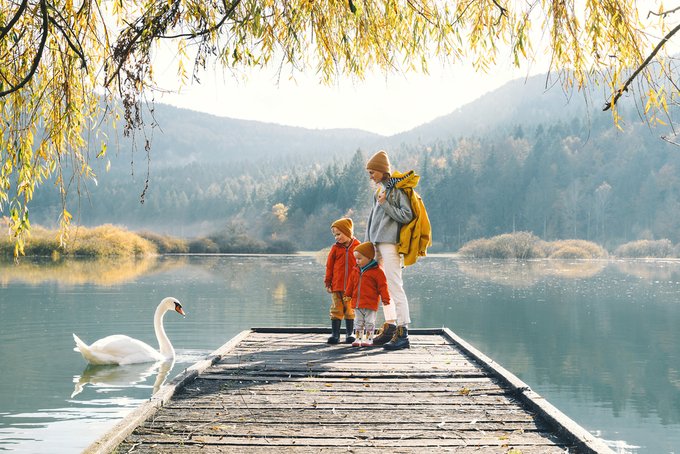
The American family vacation is an established cultural tradition, a rate of passage that is built into the life fabric. It is the long-awaited spring vacation to the Florida beaches, the summer cross-country trip in a mini-van with snacks and all the equipment in tow, the sacred journey to the portals of the Disney World, or the first foreign adventure to the Mexico resorts or European historical cities. They are the vessels in which endearing memories are molded and this is the spell when families unplug their lives back in tune with the rhythmless daily tasks of school and work and more on and connect with each other in all ways. But to any parent the thrilling anticipation of adventure has the dark sides of the responsibility, which go with the care of children. This responsibility, which is already at the top of the agenda at home, acquires greater dimensions in new environments, where risks and challenges may appear beyond recognition.
Nevertheless, the aim of traveling safety is not to limit any adventure and thus perceive the world like through the scope of fear. Instead, the American pattern of traveling is a philosophy of advanced preparations using the well-developed information systems and policies that the US citizens have easy access to in order to provide parents the knowledge of countering the risk before it happens. It is the creation of a structure of security based on careful plans, end of the day situation awareness and sharing- therefore liberating the family to enjoy the pleasure and excitement of learning without the fear. The present guide will be an all-inclusive playbook, customized to the resources, regulations and travel habits of American families, and will take you through the most important steps of finding and verifying that your children are safe, be that in visiting a national park a few states away, or crossing an ocean.
The dream of your secure and fruitful journey is not created during the week that you plan to go there, but months ahead, by following an accurate and serious pre-trip preparation procedure. This is the step, in which crisis is prevented and the feeling of security is achieved. It starts with the paperwork, the bureaucratic foundation of 21 st century travel. To any international travel, a valid US passport is required, even to the infants in the family. A key point here is that you should always ensure the passport does not expire long before you travel, because several countries will require that the passport must be valid at least six months after the time you intend to leave that country. When a family is applying to have their child under 16 years of age issue a new passport, the US law stipulates that both parents or other legal guardians must show up in person with the child or the absent parent must submit a signed and notarized consent form (Form DS-3053), in case of a parent. To travel to and in Canada and Mexico or in part of the Caribbean by land or by sea a US Passport Card is convenient to use either by children or adults. After having the documents, then create several physical and soft copies. Scan the stores in the cloud and let the hard copy be left at home with a member of the family one can rely on.
One of the most important legal defenses that particularly apply in the numerous households in America, whereby a child is on the move under the care of the single parent, grandparent, or any other custodian is the child travel consent letter. It is a very important precaution to carry notarized letter which is signed by non-travelling parent(s) though this is not always required. The letter must have all the information about the child, list of trips and gives specific permissibility on the trip giving contact addresses of the absent parent(s). All this can be avoided with just a simple document allowing you to avoid stressful and time-consuming cases of being detained at international borders, with questions relating to custody or parental kidnapping being dealt with in advance.
The health is the next pillar of preparation and the main source of information and help among American travelers is the Centers for Disease Control and Prevention (CDC). It is necessary to make a pre-travel visit to the pediatrician of your child, preferably between 4-6 weeks prior to the travel. It is also an opportunity to table-check all routine childhood vaccinations according to the recommendations of American Academy of Pediatrics (AAP), and to discuss any travel-related or country-specific vaccination requirements suggested by CDC to your specific destination. Your pediatrician will be able to make prescriptions of any medications that you might need and this will enable you to have enough for the whole trip and some more in addition in the event of delays. You are also advised to formally obtain a letter of medical conditions and prescriptions of your child which can become priceless in case you happen to travel overseas and require medical assistance or supply evidence regarding medications to customs agents.
Under this professional advice, you are able to make a complete family-dependent travel first-aid kit. It needs to be more than a couple of band-aid strips. A well-stocked kit must have age-appropriate pain and fever relief pill such as Childrens Tylenol (acetaminophen) or childrens motrin (ibuprofen), an antihistamine such as Childrens Benadryl in allergic reaction, an antibiotic cream such as Neosporin, a topical hydrocortisone cream in case of skin irritations, childrens motion sickness tablet when needed and oral rehydration solution such as Pedialyte in case of dehydration. Put in a digital thermometer, tweezers and a complete variety of bandages and antibacterial wipes. To medications Transportation Security Administration (TSA) is lenient to the 3-1-1 liquids rule; they need not be contained in a quart-sized bag, though you must make them known to the TSA officer at the security entry area. And last but certainly not least Buy full travel medical insurance whenever travelling abroad. Very frequently, your domestic health insurance in the US, including Medicare does not cover much, or nothing at all when you are out of the United States. Safe travel planning entails a specific travel policy that will cover doctor visit, hospitalization, and, most importantly, emergency medical evacuation as non-negotiable.
Another important resource of international travel safety is the US Department of State. They also give a detailed travel advisory of the country you are going to, so go to their site and read it before making any trip. There is a four-level scale (Level 1 to Level 4) in ranking these advisories: Level 1 (Exercise Normal precautions), Level 2 (Exercise Increased Caution), Level 3 (Reconsider Travel), and Level 4 (Do Not Travel) and in these levels of ranking, they give important information on safety, security, and health hazards that may be experienced in the country. This is an easy thing to do, as it is highly advisable that you enroll your trip in the free Smart Traveler Enrollment Program (STEP), any American family traveling to foreign destination. By submitting your itinerary to STEP, the local US embassy or other consulate in your destination can contact you in the event of an emergency involving road or natural disaster, or civil unrest, and help your friends and families reach you in case of crisis.
Having everything prepared, you now think about safety at the transit stage. In the case of all American families this comes in the form of the legendary road trip. Proper use of car seats is the most important aspect of road safety. The laws regarding car seats are decided by the state but optimal safety demands that the recommendations provided by AAP be adopted by the parent which at times is more than what the state law may state. Toddlers and infants are advised to stay in a rear-facing car seat as long as possible until they reach the maximum height or the maximum weight permissible by the manufacturer of the car seat. After exceeding the ages that can be supported on the rear facing seat, the children must then stay as long as possible on the forward facing car seat with a harness. Once they let go of the forward-facing seat they need to be placed in a belt positioning booster till the vehicles lap and shoulder seat belt fits them respectively and this usually occurs around when they have grown up to 4 feet and 9 inches. Have your car fixed up and prepared, bring an emergency kit complete with all necessities, flashlight, jumper cables, first-aid kit, etc.
In the case of air travel, traveling with children through the airport presents its own problems. Implementing specific programs can be a game-changer, especially when it comes to families: programs such as TSA PreCheck and Global Entry may pass you through the security faster without having to take shoes, light jackets, and laptops off your shoulders. The TSA has its protocols to follow on the families; children of 12 and less can wear their footwear. Exemption of formula, breast milk and juice: one of the most important TSA regulations that parents of infant children can enjoy is the fact that formula, breast milk and juice are not subject to the common 3.4-ounce (100ml) limit on the amount of liquid that one can carry with him. These objects are permitted in nominal amounts not to exceed your travel and they should be taken out of your carry-on luggage to be separately scanned. The Federal Aviation Administration (FAA) highly recommends the use of Child Restraint System (CRS) or car seat by parents, and the car seat must be the government approved one, onboard an aircraft. Although legally children under two years old are allowed to fly on a parental lap, at the same time, FAA quotes that the safest way is a car seat. Note that your car seat should have a sticker that says, “This restraint is certified to use in airplanes and automobiles.”
When you arrive, the hotel, resort or vacation rental becomes the place where your family lives and its security should be the forefront instrument. On arrival in your room make an extensive search and childproofing. Ensure that the windows and balconies have locked doors. The danger of balconies should not be underestimated; make sure that railings are tall and the spaces between them are minimal and make it a strict rule that children can never access the balcony without an adult being right by their side. Instead of the exposed electric supply of outlets use their covers, the hanging cords of blinds need to be taped, and all cleaning supplies and the contents of the mini-bar should be put out of accessibility.
At pools and beaches, a hyper-vigilance ought to be observed at all times, considering that drowning has become the main cause of accidental fatalities among young children. The most vital one is to adopt a rule of having a Water Watcher whenever children are in or near water. The sole task of this assigned grow-up will be to keep their eyes on the kid at all times and no phone, no book, no chatter will apply. A well-fitting life vest, that is approved by the US Coast Guard, is necessary to those who are non-swimmers and poor swimmers; inflatable water wings and pool toys are not safety devices, and they may give the false impression of safety. In the pool of a hotel or resort, note whether there is a lifeguard there or not, but never leave it to them as the direct supervision of your child is very important. At the beach, tell kids how powerful waves can be and how dangerous rip currents are, and don t even go into the water in a swimming zone which is not marked off, and preferably, have a lifeguard present. In the case of a stay in a privately rented accommodation, such as an Airbnb or VRBO, use extra caution regarding the safety of the pool, as these locations might not be equipped with safety measures as the public pools are.
Being trained to be more aware in a situation is important when going outside to walk around. When one is in a busy place such as a theme park, busy city square or popular museum, one can easily lose contact. Put your children in bright colors that would be easily visible. When you are going into a busy place, you should decide on an easy to remember meeting place in case of separation. The stranger danger has been changing; rather than a universal-do not talk to anyone you do not know, the modern strategy has been to educate children to recognize a safe stranger the stranger when they need help, a uniformed guard or police officer, a store staff with identification tags, or another mother with kids.
Personal hygiene and health when on the road also play an important role, particular in case of international travel. Keep the easy mantra (Boil it, cook it, peel it, or forget it) of the CDC on the list of many developing countries concerning food and water safety. This involves only consuming bottled or purified water; not taking ice cubes in drinks and avoiding raw fruits or vegetables that you have not peeled raw yourself. It is important in sunny location that you have sun protection and that you wear a broad-spectrum, water-resistant sunscreen with an SPF of at least 30 and apply frequently. Promote the wearing of hats, sunglasses and protective clothes. To prevent insect-borne disease, put on an insect repellent that contains DEET on an EPA-registered repellent in case there are mosquitoes or ticks in the area.
Lastly, we live in a hyper-connected world, where the digital safety forms part of the travel safety. Download movies, games, and books on your children devices, especially those whose age is suitable, so you can count on them during traveling, and not on Wi-Fi access. Be cautious of restricted wireless connections at airports, hotels, and cafes because they are easily attacked. When performing a potentially sensitive online action, you need to go through either VPN or a personal hotspot of your phone. In the case of older children and teens, ensure that there is a decisive talk regarding privacy on social media outlets. Tell them not to share or tweet particular site details or pictures in real-time. It is better to wait to say that you are on vacation and not to broadcast this information until you get back home or leave a place.
There is no doubt that being responsible towards the safety of children during travel is a huge task and it needs not be approached with anxiety, it should be taken up diligently and pro-actively. To the American family it implies taking advantage of the abundance of information and highly-serviceable systems that they offer in their institutions, such as the CDC, the State department and the TSA. It is regarding a systematic process that starts months in advance of a journey, details given to the documentation, health and research. It extends even in transit with strict observation of car seat and aviation safety rules. It stretches as far as the destination whereby taking care of the person at all times by the water side and having a sharp sense of knowing what is going on around them becomes automatic. Because by establishing these strata of security, by planning, would be prepared in the event of contingency and because you are in constant and open communication with your children, you create a situation whereby adventure can thrive but do so safely. All this planning is the best that you can do to your family because this way will be able to forget about the concerns and be right here and now, enjoy the present, travel about the purpose of the trip, to make a lifetime of memorable moments, and you will not have doubts that you have done everything that is possible to make your family happy and safe.